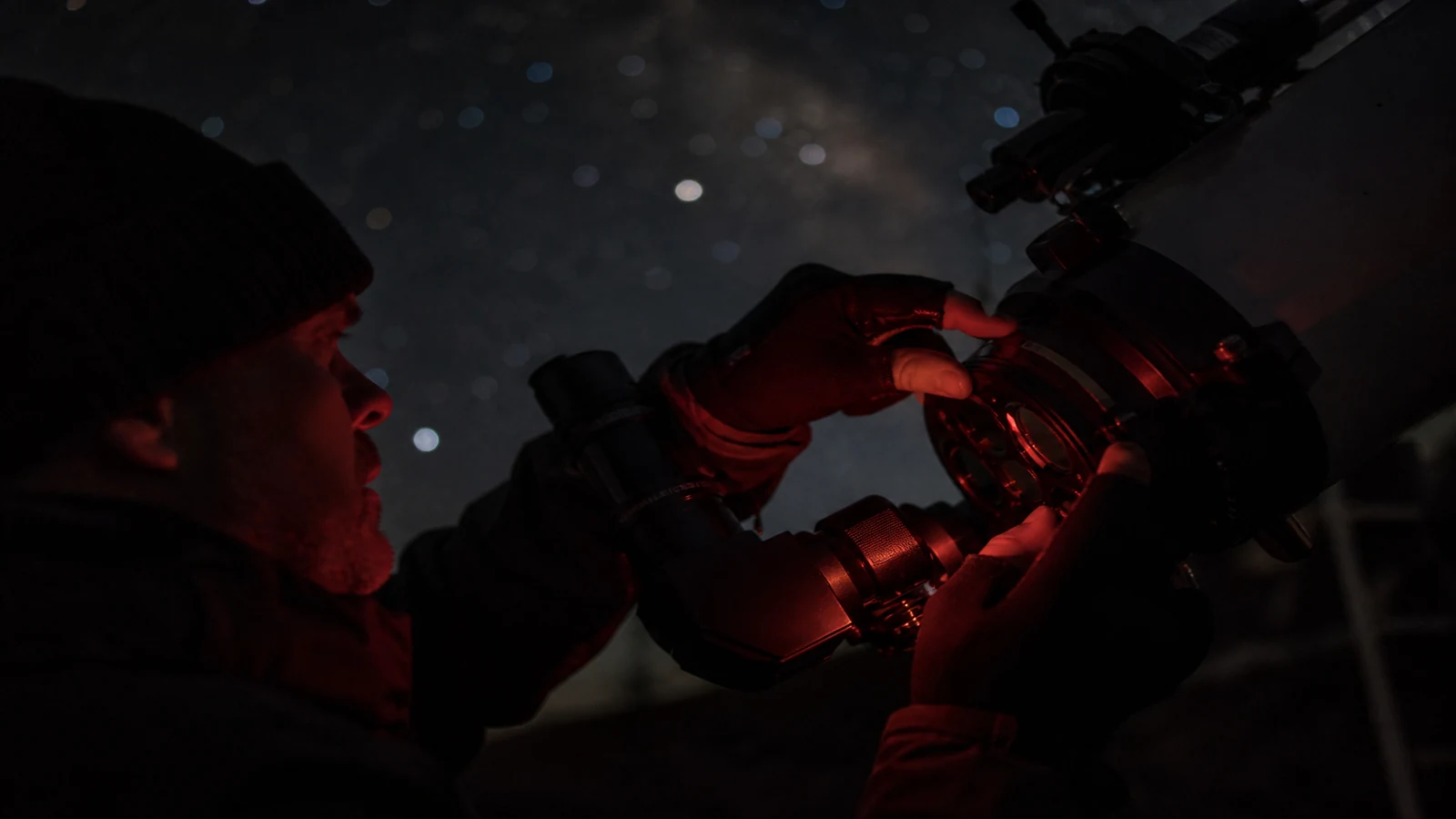
Swap filters in the dark without ruining dark adaptation UK
Screw-on filter swaps under a UK winter sky often mean white torch light, dropped caps, and a recentred planet after every change. Pre-loading filters in a manual wheel reduces handling in the beam and lets you rotate by feel using click-stops. You still need a dim red torch for initial setup—but mid-session changes get calmer.
Why screw-on swaps break dark adaptation
Each threaded change invites a bright phone or torch, especially when threads cross in the cold. Observers lose several minutes of sensitivity while Jupiter drift moves out of view. A wheel keeps filters enclosed and indexed so the eyepiece stays put.
Three bad habits to avoid
- Holding filters in your mouth while threading—dust and dropped glass risk.
- Shining a white torch into the eyepiece while checking filter labels.
- Placing un capped filters on wet grass or a vibrating tripod tray.
Wheel workflow with click-stops
Load filters at the table before leaving the house. Mark a paper map of slot numbers you can read once with a dim red light. At the scope, rotate the wheel until the click-stop engages—no need to read filter names mid-session. Keep one blank slot for quick unfiltered comparison when testing nebula filters.
Moon-to-planet sequencing
When the Moon is up, start with your moon or ND slot before rotating to planetary colours. You avoid removing the eyepiece to swap a moon filter for a yellow Jupiter slot. Sequence matters on short UK windows when clouds may end the session after one planet.
Glove-friendly setup tips
Choose a wheel with knurled edges you can grip with liner gloves. Store spare caps in a fixed tray on the observing table, not on the ground. Numbered positions you memorise beat tiny engraved filter names you cannot see in the dark.
When you still need a dim torch
Initial filter loading and balancing the mount still need low-level red light. The wheel removes most mid-session white-light moments but does not eliminate setup entirely. Expect slight refocus shifts if mechanical tolerance moves the stack—recentre if needed.
For a manual wheel with tactile indexing, see the 9-position 1.25-inch filter wheel specification on this site.
Will a wheel guarantee zero alignment shift?
No. Most sessions stay close, but check focus after large rotations on fast systems.
Is dark adaptation the same for nebula and planetary work?
Planetary observers use brighter targets; nebula sweeps benefit more from avoiding white light between swaps.